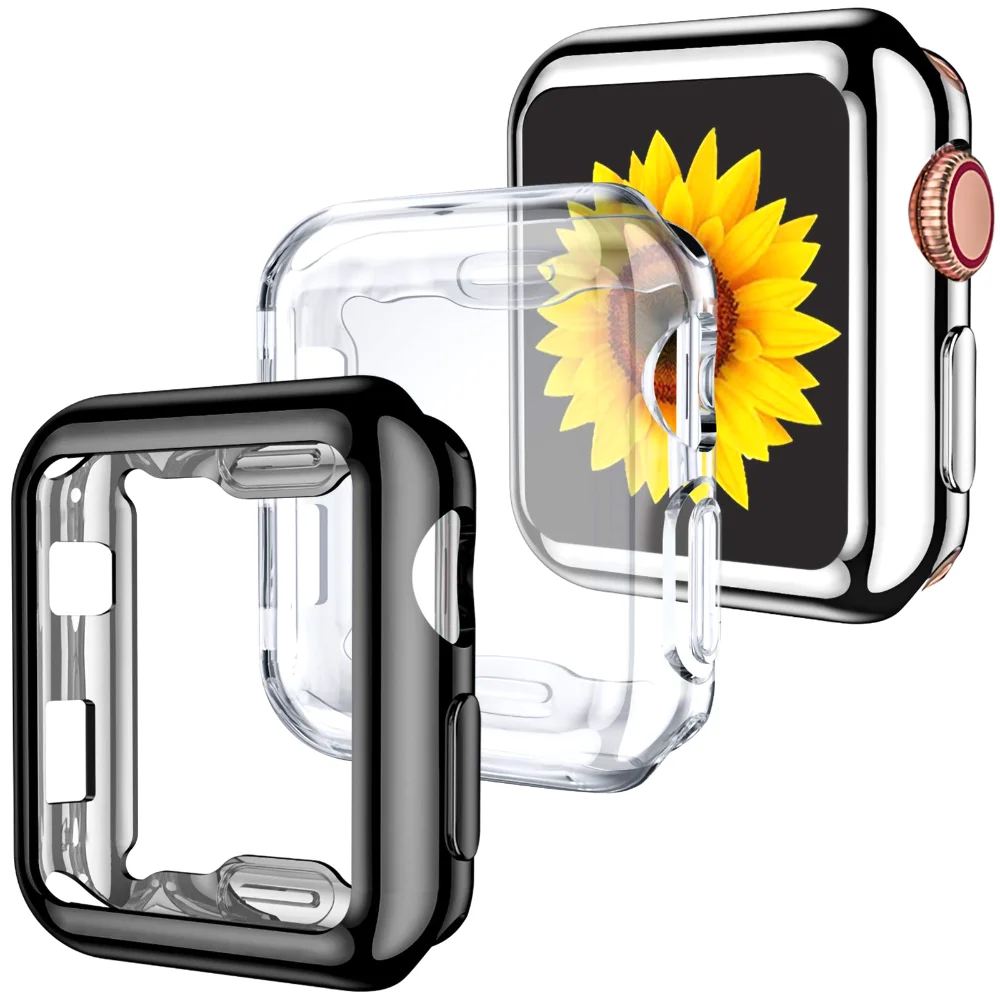
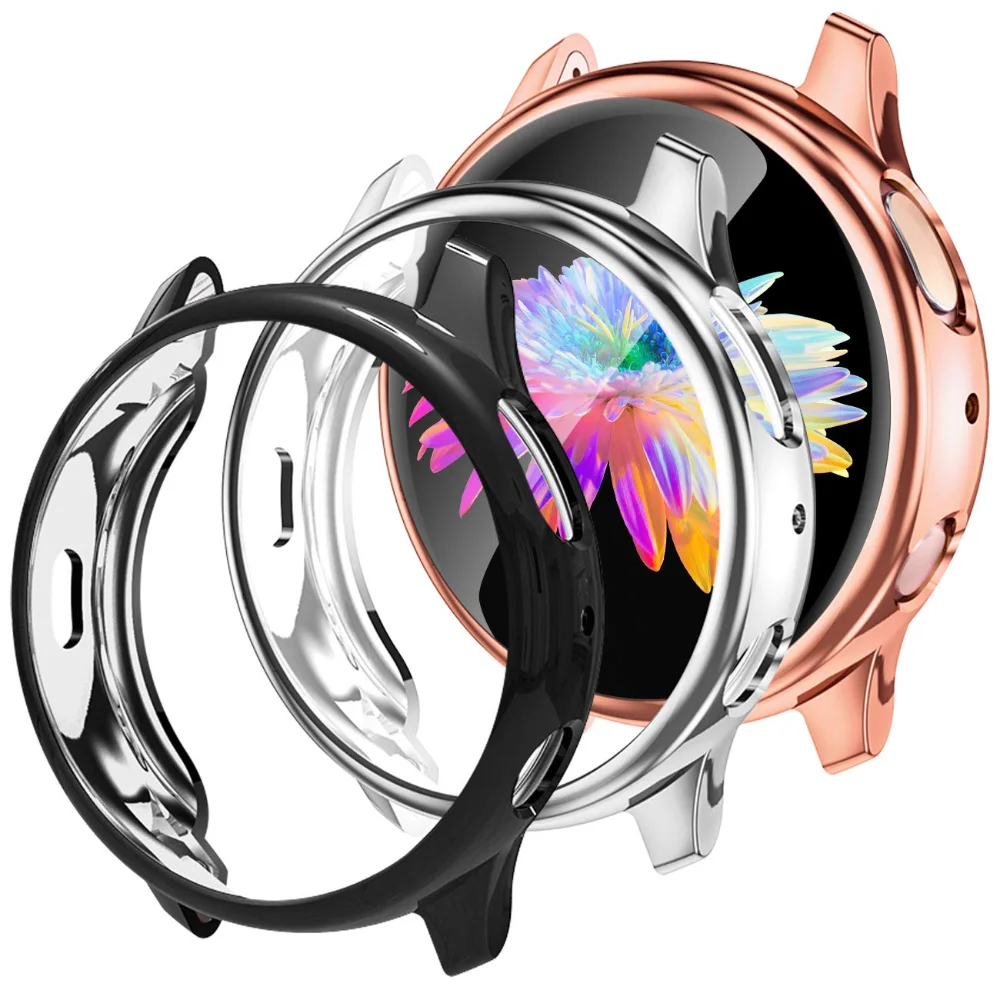
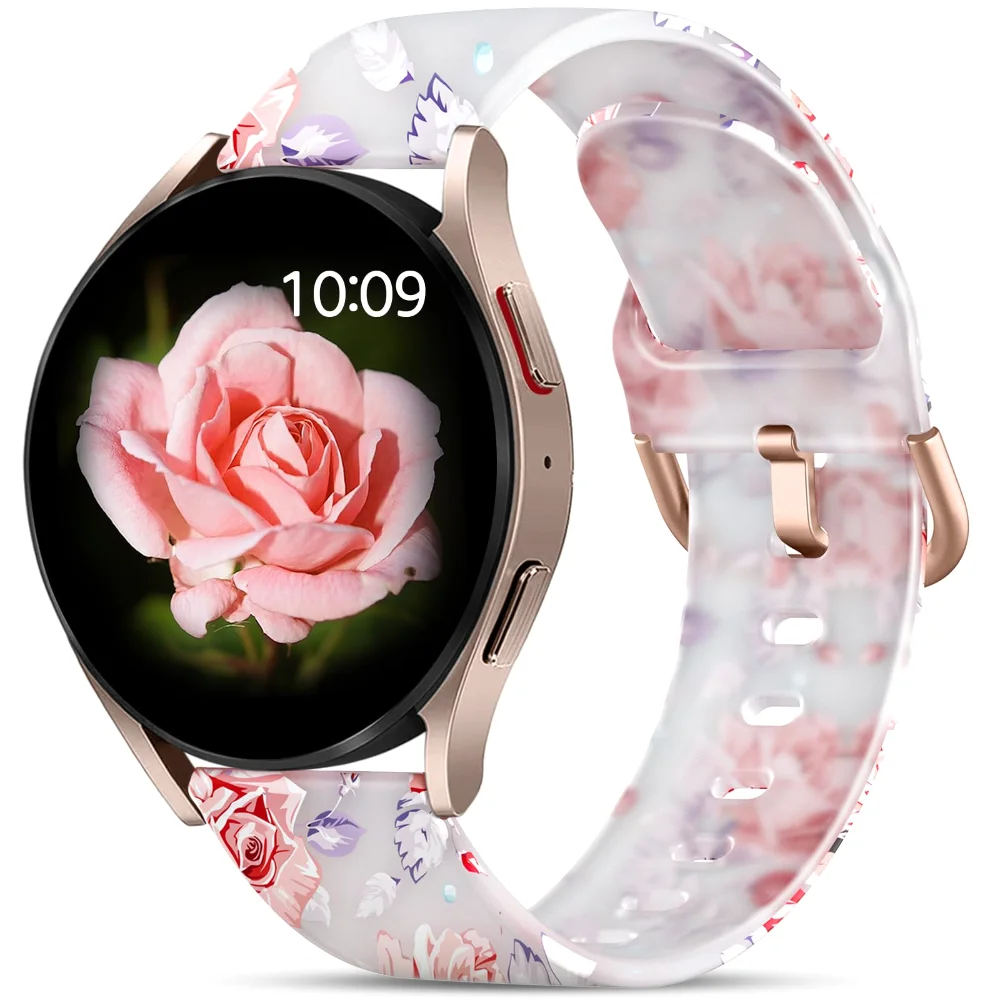
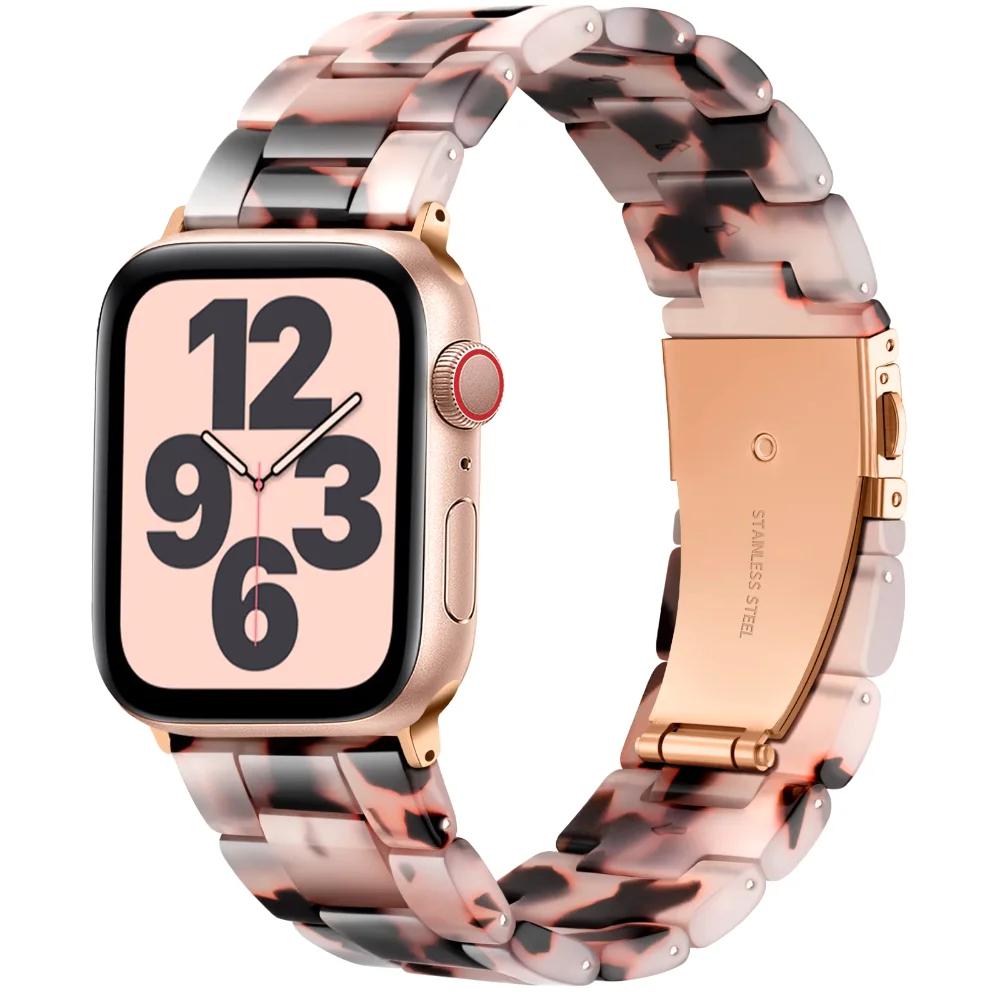
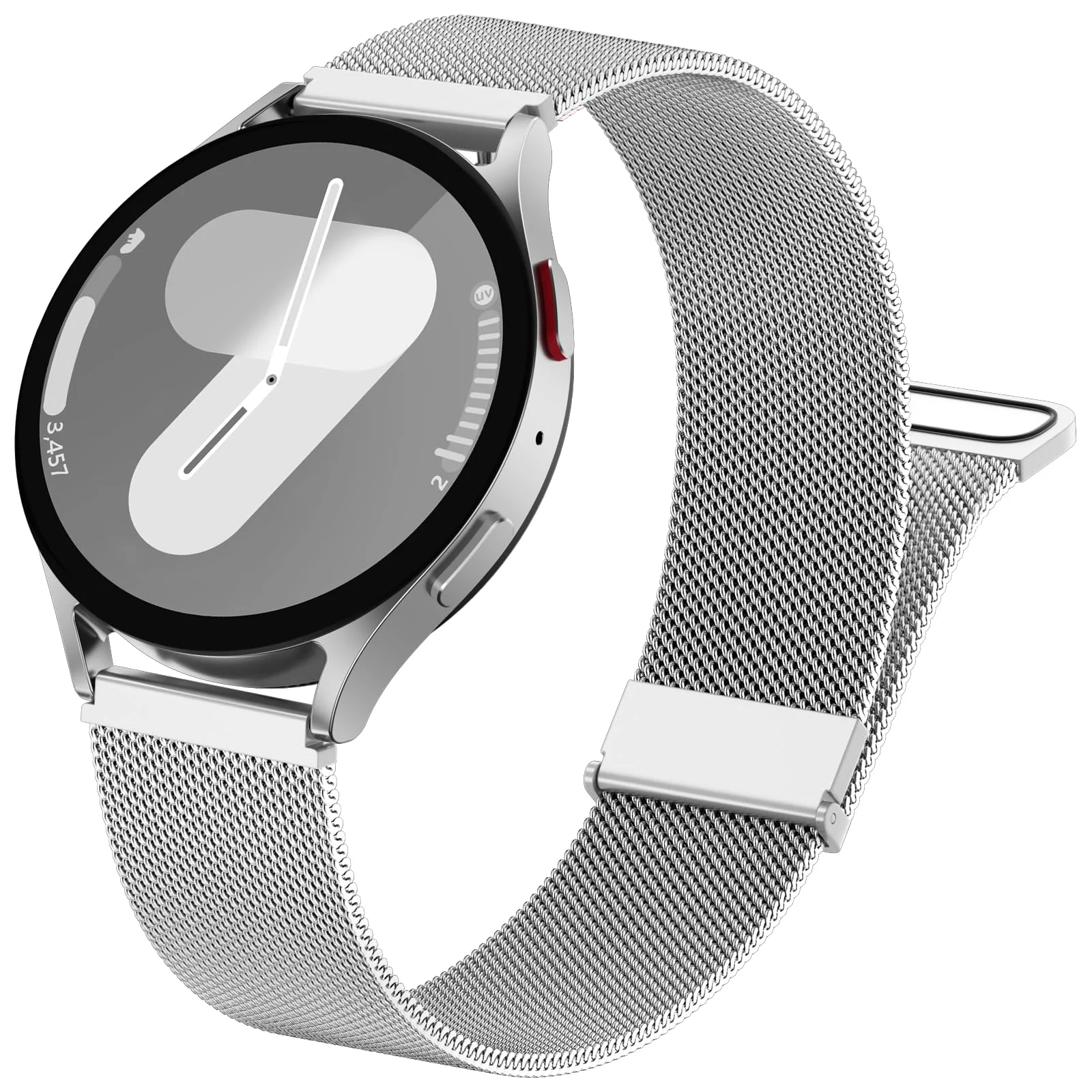
GEAK bands and cases for Apple Watch, Galaxy Watch, Fitbit and Garmin
You do not need a new watch to be tired of the strap on it. Tell us which watch is on your wrist and the catalogue narrows to the bands that go on it - the right lug width, the right case size, in silicone, steel mesh, leather, nylon and resin.
Pick the make and the model. You land on the shelf that holds the bands cut for it, and the note underneath tells you the width or the case run to look for.
Not sure which generation you have? The model name is engraved on the back of the case, under the sensor.
01
Four watches, one catalogue
Every GEAK band is cut for a watch, so the shelves are cut that way too
Apple measures in case sizes. Samsung and Garmin measure in lug width. Fitbit uses its own pins and measures in tracker names. Those are three different questions, and mixing them into one grid is how people buy a strap that will not go on.
Six things worth two minutes with the watch in your hand. Five of them are free and the sixth needs a ruler.
01
Turn the watch over
The model name is engraved on the back, under the sensor window: Vivoactive 5, Charge 6, Watch7. That name is what a band page names, and it beats guessing from the shape of the case.
02
On a Garmin or a Galaxy, measure the gap
Take the old strap off and measure across the slot it sat in, in millimetres. That is the lug width, and it is the whole of the fit question: 18, 20, 22 or 26.
03
On an Apple Watch, read the case
There is no lug width. There are two runs of case size, and a band is cut for one of them: 38, 40, 41 and 42mm in the small run, 44, 45, 46 and 49mm in the large one.
04
A Fitbit takes its own pins
A Charge strap and a Versa strap are different objects, and neither is measured in millimetres. Buy by tracker name and nothing else.
05
Decide about metal before colour
A steel mesh releases small amounts of nickel, which is the most common contact allergen in the country. If costume jewellery leaves a mark on you, take the silicone.
06
A pack is a wardrobe, not a spare
The multipacks are one strap in ten or fifteen colours, not ten of the same. The colours are set by the pack and cannot be chosen one at a time.
The number decides and everything after it is preference: that is the GEAK approach to a strap.
Six materials, and what each one is like after a month
A strap is a small object with one job, so the material is most of the decision. Here is what each one does on a wrist that is worn all day.
Silicone
The default for a reason: it takes sweat, rinses under a tap and dries in minutes. It also picks up lint from a coat sleeve, and a dark one shows dust.
Braided elastic
No buckle at all - it stretches over the hand and sits closer to the skin than anything else here. Size it by wrist, not by watch, and expect it to relax slightly in the first fortnight.
Steel mesh
The dress option, adjusted by sliding the clasp anywhere along the band rather than by holes. It is the one to read the material line on: steel releases nickel, and a nickel rash turns up on the wrist under a watch.
Leather
Softens to the shape of a wrist over a few weeks and looks better for it. It is the one material here that does not want the gym: sweat and repeated wetting are what age a leather strap fastest.
Nylon
Light, breathable, and the only one you can wash and forget. The weave holds a crease if it is stored folded, so it wants to be left flat or on the watch.
Resin and engraved silicone
The two decorative lines. Resin is cut and polished like a bracelet; the engraved bands are silicone with a pattern cut into the face, which catches the light without adding anything to the thickness.
Every material in the GEAK catalogue is cut to the same widths, so the choice is what it is made of rather than whether it will go on.
05
The honest part
What a band is, and what it is not
A strap holds the watch on and changes nothing the watch measures. The one thing it does change is what your skin spends the day against.
A band holds a watch on. It does not change what the watch measures, it does not add water resistance the watch does not have, and no strap on this site is a medical device. If a heart rate reading looks wrong after a strap change, the thing to check is how tightly the case sits against the skin, not which colour went on.
The one health question a strap does raise is metal. Nickel is the most commonly confirmed contact allergen in the United States across every age group, stainless steel releases small amounts of it, and the wrist under a watch is one of the places the rash shows up. If a metal watch or a pair of costume earrings has ever left you red, buy silicone or nylon rather than mesh - and a rash under a watch is a reason to take the watch off and ask a clinician, not to try another colour.
Silicone, nylon and resin carry no nickel at all, and you will find all three in GEAK releases.
A strap is a strap. It does not change what a watch measures, it does not make a watch more water-resistant than the watch already is, and nothing here is a medical device. Stainless steel releases small amounts of nickel, and nickel is the most common cause of allergic contact dermatitis in the United States; anyone who reacts to costume jewellery should read the material line before buying a mesh band. A band worn tight enough to leave a mark is worn too tight, and a rash under a watch is a reason to take the watch off and ask a clinician rather than to buy a different colour.
06
Asked for by name
The GEAK pages people search for
Each of these is a question typed in full, and each one has a page behind it with the straps that answer it.
Twenty millimetres turns up on more watches than any other number, and that alone earns it a page. Samsung has stayed on it from Galaxy Watch 4 to Galaxy Watch 9, Garmin fits it to Vivoactive, Forerunner and most of the Venu range, and a strap bought here goes on any of them. If you already know the width, this is the shortest route from that number to a colour.
A mesh band is the one strap in this catalogue that changes what a watch is for. It has no holes, so it does not land half a size out; the clasp slides anywhere along the weave and closes flat under a shirt cuff. It is also the one to read the material line on, because stainless steel releases nickel and nickel is the commonest contact allergen in the country. Every mesh on this page is cut for a stated width or case run.
Leather is the only material in this catalogue that gets better with wear. It takes the shape of a wrist over the first few weeks, softens where it folds and darkens where it is handled, and after a month it sits like a strap that was made for you. It is also the one that dislikes water, which is the whole of the maintenance advice: take it off before a swim and it will outlast two silicones.
A multipack is the cheapest way to find out which colours you actually reach for. Fifteen silicone straps arrive in one envelope, cut for one of Apple’s two case runs, and the whole box costs about what two single bands cost. What you give up is the choosing: the colours come as a set, and there is no picking eleven of them.
Fitbit gave Versa 3, Versa 4, Sense and Sense 2 the same strap fitting, which makes this the easiest page in the catalogue to buy from: if you own any of the four, everything here goes on. The engraved silicone is the line worth looking at first - the pattern is cut into the face rather than printed on it, so it is still there after a year of wear.
The Vivoactive is the Garmin most people are replacing a strap for, and it is the easy case: 20mm across Vivoactive 3, 4, 5 and 6, with quick-release bars on every strap here. The one to check is the smaller 4S, which takes 18mm. Silicone, nylon, leather and mesh, all in both widths.
A GEAK catalogue built around fit rather than fashion
Four watch families, nine materials, and a catalogue that grew the way the watches did.
GEAK has been making replacement straps since 2019, and the catalogue has grown the way the watches did: a line for each family, in the widths that family uses, and colours added where people asked for them rather than where a trend went.
Fit is the whole of it. A strap is chosen by a number - the lug width, or the case a cover has to clear - and that number is the first thing you meet on any piece we make. Where a piece has a limit, a mesh that carries nickel or a pack whose colours cannot be picked one at a time, you meet that before you reach the price.
Four watch families keep everyone at GEAK busy: Apple Watch, Galaxy Watch, Fitbit and Garmin, each in the widths and case sizes that family actually uses.
Silicone does not absorb sweat, so people assume it needs nothing. What builds up under it, what makes a strap smell, and the two-minute routine that stops both.
A milanese clamps anywhere along the weave, a link bracelet loses links, a buckle lands on the nearest hole. Which of the three fits a wrist properly, and why.
Three different things leave a mark under a watch and they are not treated the same way. What the published guidance says about the commonest of them, and what to change first.
Questions people ask
What people ask GEAK before they order
Eight of them. Longer answers live on the shelf pages and in the guides.
Where can you buy a GEAK band?
Every buying button on this site opens the band you were looking at, in the colour and width you chose, at our retail partner. That is where the payment and the delivery happen, and where the price you see is the price you pay.
The wide button at the foot opens the whole range at once, which is quicker if you are still deciding between two materials.
How do you know which GEAK band fits your watch?
Turn the watch over and read the model name engraved under the sensor. Every band page on this site names the watches that band is cut for, so the name on the back of your watch either appears on the page or it does not.
If you would rather not read a page at all, the finder at the top of the front page takes the make and the model and sends you to the shelf that holds the right straps.
What lug width does your watch take?
Take the old strap off and measure across the slot it sat in. Garmin runs 18mm on the small Venu models, 20mm on Vivoactive and Forerunner, 22mm on Instinct and the mid-size Fenix, and 26mm on the big Fenix. Samsung has used 20mm across Galaxy Watch 4 to 9, the Classic, the FE and the 5 Pro.
Apple Watch has no lug width at all, and neither does a Fitbit. On an Apple the number that matters is the case size; on a Fitbit it is the name of the tracker.
Will a GEAK Apple Watch band fit every Apple Watch you own?
Within its run, yes. Apple keeps two: 38, 40, 41 and 42mm in the small run and 44, 45, 46 and 49mm in the large one, and a band cut for one run goes on any watch in it. A band from the small run will not go on an Ultra.
The case size is on the back of the watch and in the Watch app under General, About.
Are GEAK metal bands a problem if you react to jewellery?
They can be. Stainless steel releases small amounts of nickel, and nickel is the most commonly confirmed contact allergen in the United States across all age groups. The wrist, under a watch, is one of the places that rash appears.
If costume jewellery has ever left you red, take the silicone, the nylon or the resin rather than the mesh. A rash under a watch is a reason to take the watch off and ask a clinician, not to try a different colour.
What do you get in a GEAK multipack?
One strap in ten or fifteen different colours, not ten of the same strap. The colours are set by the pack, so you take the set as it comes rather than choosing them one at a time.
The number in the box and the colours in it are both on the product page, and the price per strap is what makes the packs worth looking at: a fifteen-pack works out at a little over a dollar a strap.
Can you wear a GEAK silicone band in the shower or the pool?
Silicone and nylon take water and dry quickly, and rinsing a sport band under a tap after the gym is the whole of the maintenance. What water does not do is change the watch: a strap adds no water resistance the watch does not already have.
Leather is the exception. Repeated wetting is what ages a leather strap fastest, so it is the one to take off before a swim.
How long will a GEAK band take you to put on?
Under a minute once you have done it once. The Garmin and Galaxy straps carry quick-release spring bars, so a fingernail on the little lever frees the old strap without a tool.
Apple bands slide out of the case on their own rail, and Fitbit straps click into the tracker’s own pins. None of the three needs anything from a toolbox.
Every width, every colour
Every width and colour in the GEAK range sits behind this button, with the price from our last update against each one.